How label claims, application instructions
and compliance impact floor hygiene
Effective floor hygiene is essential for controlling pathogens such as Listeria in food processing environments. However, not all granular disinfectants are designed or approved for use on production floors, and the wrong choice can create safety, residue, and compliance risks.
This article compares ProvaStep®, a dry granular disinfectant developed for factory floors, with chlorine-based granules and percarbonate-based disinfectants used off-label.
The Challenge of Floor Hygiene in Processing Plants
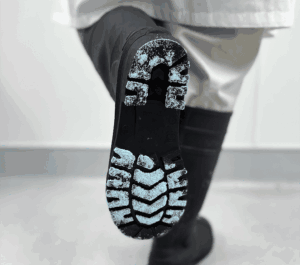
Floors are a major pathway for cross-contamination, especially in wet or high-traffic areas. Forklifts, pallet trucks, and footwear move bacteria between hygienic zones, and traditional liquid cleaning methods often add water, increasing microbial spread rather than controlling it.
Dry granular disinfectants help address this risk—but only if they are correctly labelled for production floors.
ProvaStep: A Granular Disinfectant Designed for Processing Floors
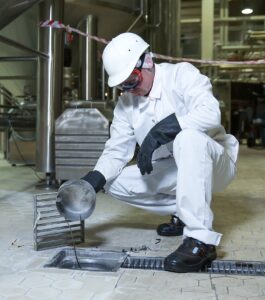
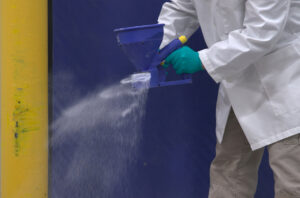
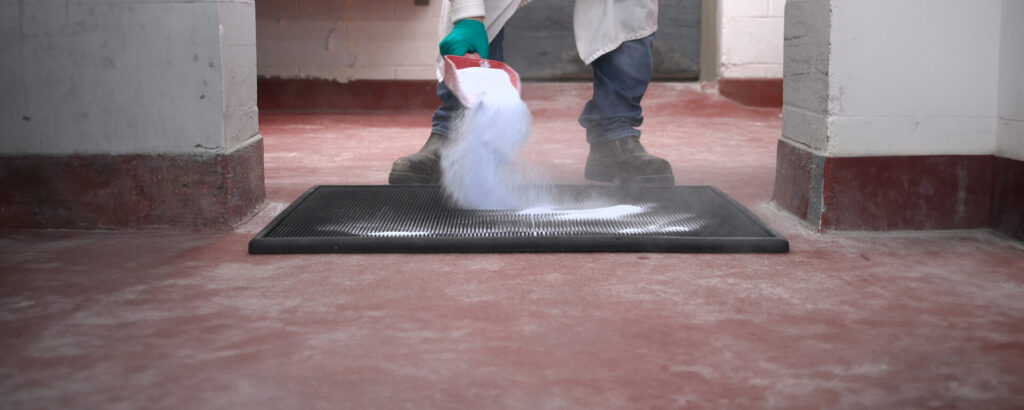
ProvaStep is a dry, granular disinfectant specifically designed for use on processing floors. The granules activate only when they contact incidental moisture already present on the floor, releasing a hydrogen peroxide-based disinfectant.
Key benefits:
- Tested to EN 1276 and EN 13697 for bactericidal disinfection
- Approved for use on factory floors, drains and entryways in the UK
- Clearly labelled and tested for application on floors
- Dry application avoids introducing additional water during production
- Produces no chlorate or halogenated residues
- Noncorrosive and compatible with modern production flooring
Because it is clearly labelled for floor use in production environments, ProvaStep fits well within HACCP systems as part of a plant’s overall food safety management framework.
Chlorine Based Granular Disinfectants: Effective but Chemically Risky
Chlorine granules remain widely used due to broad antimicrobial activity, but they present several challenges in food processing plants:
- Safety: Chlorine residues can react with acids or other cleaners to release chlorine gas, posing a serious respiratory risk if chemicals are mixed unintentionally.
- Chlorate residues: Chlorine breaks down into chlorate; a regulated residue linked to iodine uptake concerns and increasing regulatory scrutiny.
- Material damage: Over time, chlorine can corrode metals and degrade floor finishes, creating harbourage points for bacteria.
- Limitations: Chlorine is inactivated by heavy organic matter, requiring floor to be cleaned first for maximum effectiveness. It will not likely provide continual protection during production.
These risks mean chlorine use requires careful control, documentation, and compatibility management.
Off-label Percarbonate Disinfectants: Powerful but Not Floor-Focused
Percarbonate disinfectants are often supplied to healthcare facilities for use in drains and medical environments due to their strong oxidising and sporicidal properties.
However, when considered for application on floors for floor hygiene, limitations include:
- Labelling: Application instructions do not include directions for use directly on floors and entryways.
- Wet Application: Products must be dissolved in water to activate.
- Cross-Contamination Risk: Excessive dustiness creates food contact surface exposure risk.
- Efficacy Data: Products tested as a liquid, not as a dry disinfectant.
Using products outside their intended or labelled purpose can increase audit and compliance risk.
Quick Comparison
for use on floors
is dissolved in water
Final Thoughts: Choosing the Right Granular Disinfectant
Chlorine and non-regulated percarbonate disinfectants have legitimate uses, but they were not designed primarily for continuous, in-production floor hygiene.
ProvaStep stands out as a granular disinfectant:
- Developed and approved specifically for processing floors
- Clearly labelled and tested for this application
- Free from chlorine-related residue and mixing risks
- Designed to reduce water use and chemical exposure and simplify compliance
- Reduces audit risk by allowing facilities to follow clearly labeled application instructions
For manufacturers prioritising Listeria control, operator safety, and audit confidence, ProvaStep represents a modern alternative to traditional granular disinfectants.