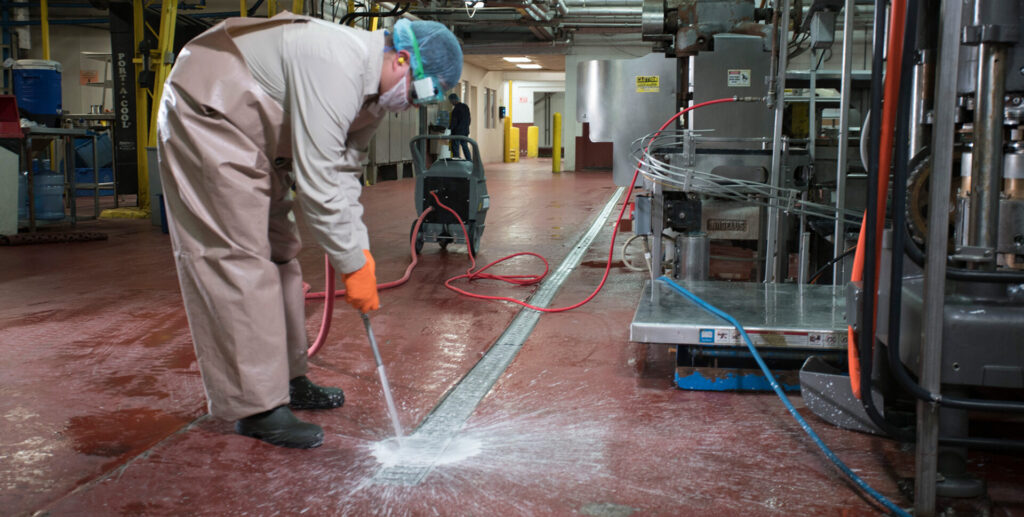
For years, hygiene crews have been manually cleaning floor drains in food manufacturing facilities. What if there was better way to protect your product from contamination, while saving time and labour?
Here are three common mistakes in floor drain cleaning:
-
Manual Scrubbing
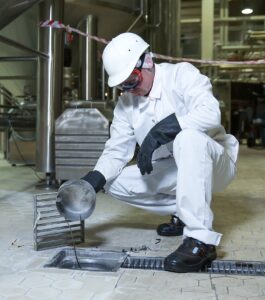
Drains create the ideal environment for biofilm to grow and thrive. Biofilms provide a protective home that helps pathogens resist disinfection. Historically, floor drain cleaning procedures included manually scrubbing drains to break up biofilms. However, manual scrubbing can aerosolise bacteria and cause it to spread to food contact surfaces and even travel throughout the facility via the HVAC system.
-
High-Pressure Rinses
Similarly to manually scrubbing drains, rinsing with a high-pressure water source can aerosolise bacteria, causing cross-contamination concerns.
-
Not Cleaning Your Floor and Drain Tools
Cleaning and sanitation tools are often overlooked or not prioritised in SSOPs. It is imperative to utilise clean equipment for cleaning and sanitation procedures. Even equipment that is dedicated to specific tasks must be sanitised between uses to prevent cross-contamination.
Save Time and Labour with Sterilex
ProvaCharge® Foam creates a thick foam that clings to drains. The chemistry penetrates biofilm to kill pathogens protected within biofilm, such as Listeria and removes biofilm. Simply fill the drain with foam and walk away—there is no need for a final rinse.
Challenge
Have you evaluated your drain cleaning procedures lately? Do you manually scrub, use high-pressure water or overlook disinfecting your cleaning tools? We challenge you to rethink how to clean your floor drains and modify your drain sanitation standard operating procedure (SSOP) to include ProvaCharge Foam.